Orphaned Machines Are More Common Than You'd Think
Machine builders close. More often, they get acquired and the buyer supports its own product line while the legacy spares catalogue quietly dies. Industry forums are full of the same story: a press, a packaging line, a lathe with decades of service left, and a support email address that bounces. The machine is orphaned, and the conventional supply chain has nothing left to offer it.
The machine itself doesn't care. Its parts are steel, bronze and aluminum with measurable geometry, and anything that was machined once can be machined again without the company that originally drew it. That's what we do: turn the parts you have into the parts you can order.
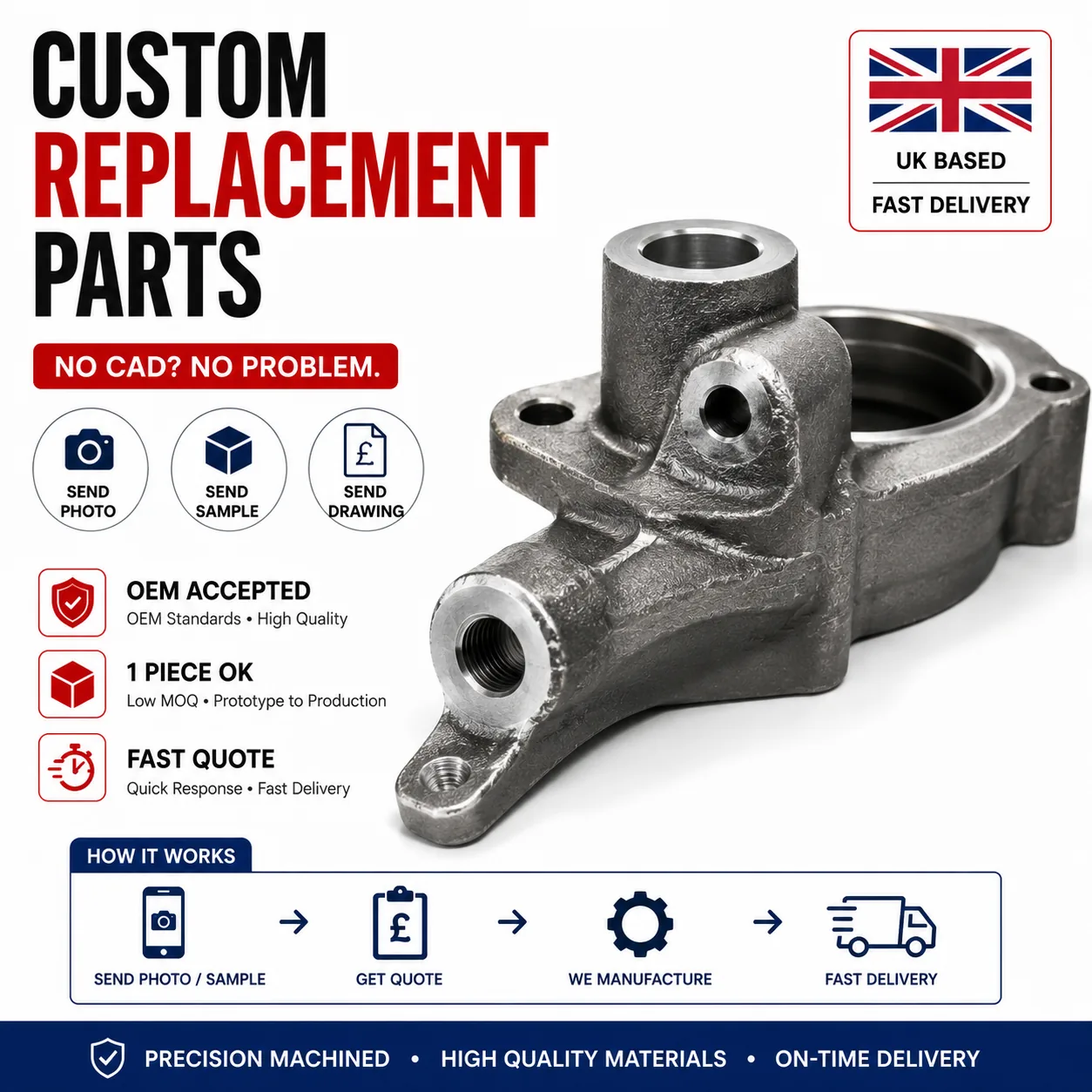
What You Have Is Enough
| What you have | What we do with it |
|---|---|
| The worn or failing part | Measured on CMM, geometry restored to design intent, remanufactured |
| A broken part, in pieces | Geometry reconstructed from the fragments see broken part reproduction |
| Photos plus one dimension | Enough to quote; we confirm geometry from the part before machining |
| An old paper drawing | Converted to CAD and manufactured fastest, most exact route |
| The intact machine | Critical parts measured in place or during planned maintenance, before anything fails |
What you don't need: the OEM's blessing, their drawings, their part numbers, or any contact with whatever remains of the company. Our blog guide covers the search-and-salvage routes worth trying first; this page is for when you're past that.
Typical Orphaned-Machine Parts
Drive components
Shafts, gears, sprockets and couplings the parts that wear first and kill the machine when gone.
Wear parts
Bushings, liners, guide rails, rollers consumed on schedule, needed forever.
Machine-specific fittings
Proprietary connectors and adapters no catalogue ever carried. See adapters & fittings.
Housings & carriers
Bearing housings, seal carriers and covers machined from billet to replace lost castings.
Cams, levers, links
The motion parts of older automatic machines packaging, textile, printing.
Pump & valve internals
Impellers, sleeves, seats and stems for fluid equipment whose maker is gone. See pump parts.
Don't reproduce standard parts. Bearings, seals, belts and sensors on your orphaned machine are usually commercial items with live supply chains they just need identifying. We tell you when a part is standard and point you to the equivalent instead of quoting to machine it. You pay for custom manufacturing only where it's actually needed.
The Smart Move: Build the Spares Shelf Before the Failure
- List the parts that stop the machine typically 5?5 components: drive parts, wear parts, anything unique to the builder.
- Measure while it runs unworn parts measured during planned maintenance give the truest geometry, with zero downtime pressure.
- Order a small batch of each batch pricing is a fraction of emergency one-off pricing, and the CAD we build is yours for every future reorder.
- Sleep through the next failure the part is on your shelf, and reordering is an email, not a crisis.
Parts Made When There Was No OEM Left
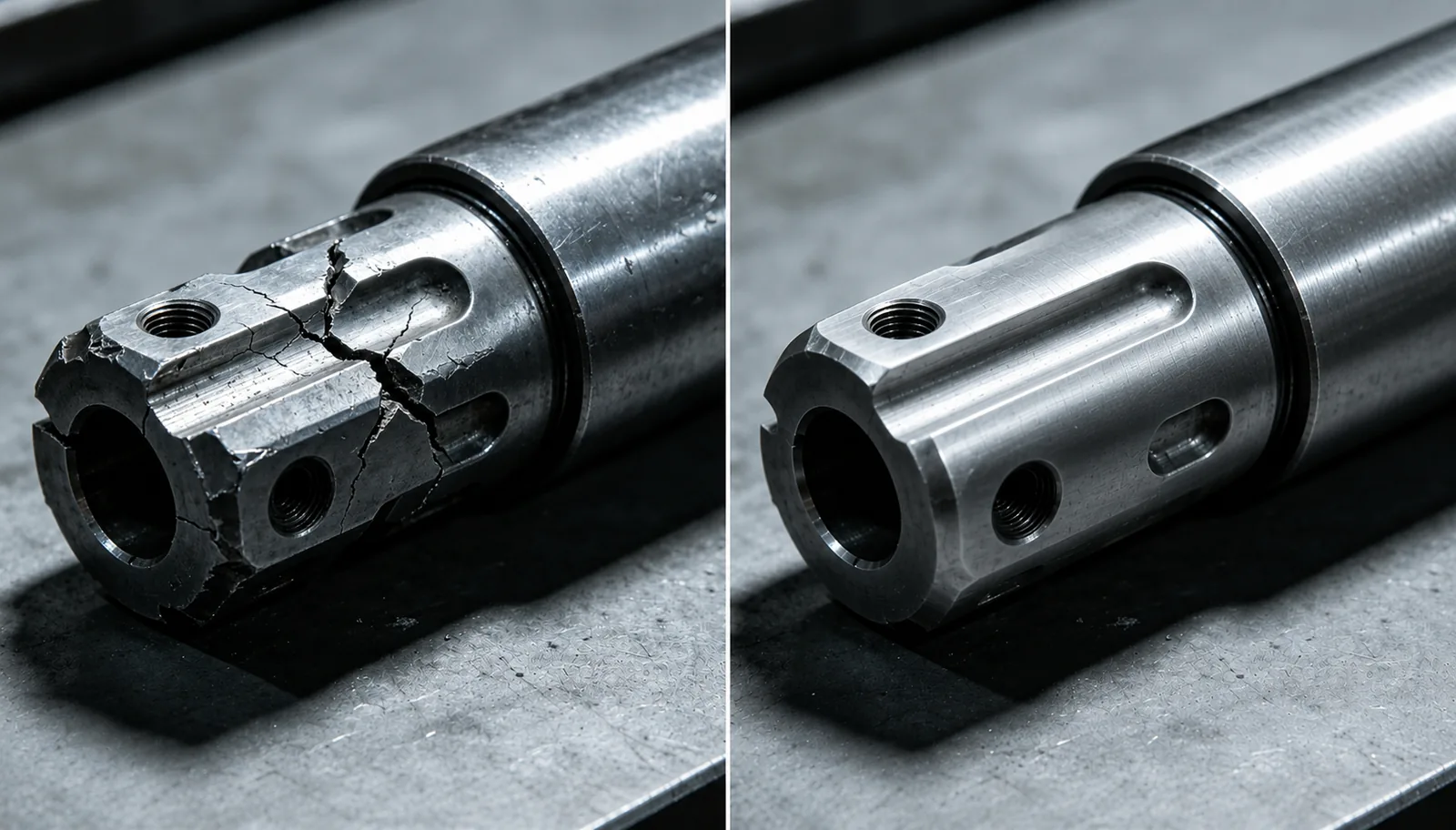
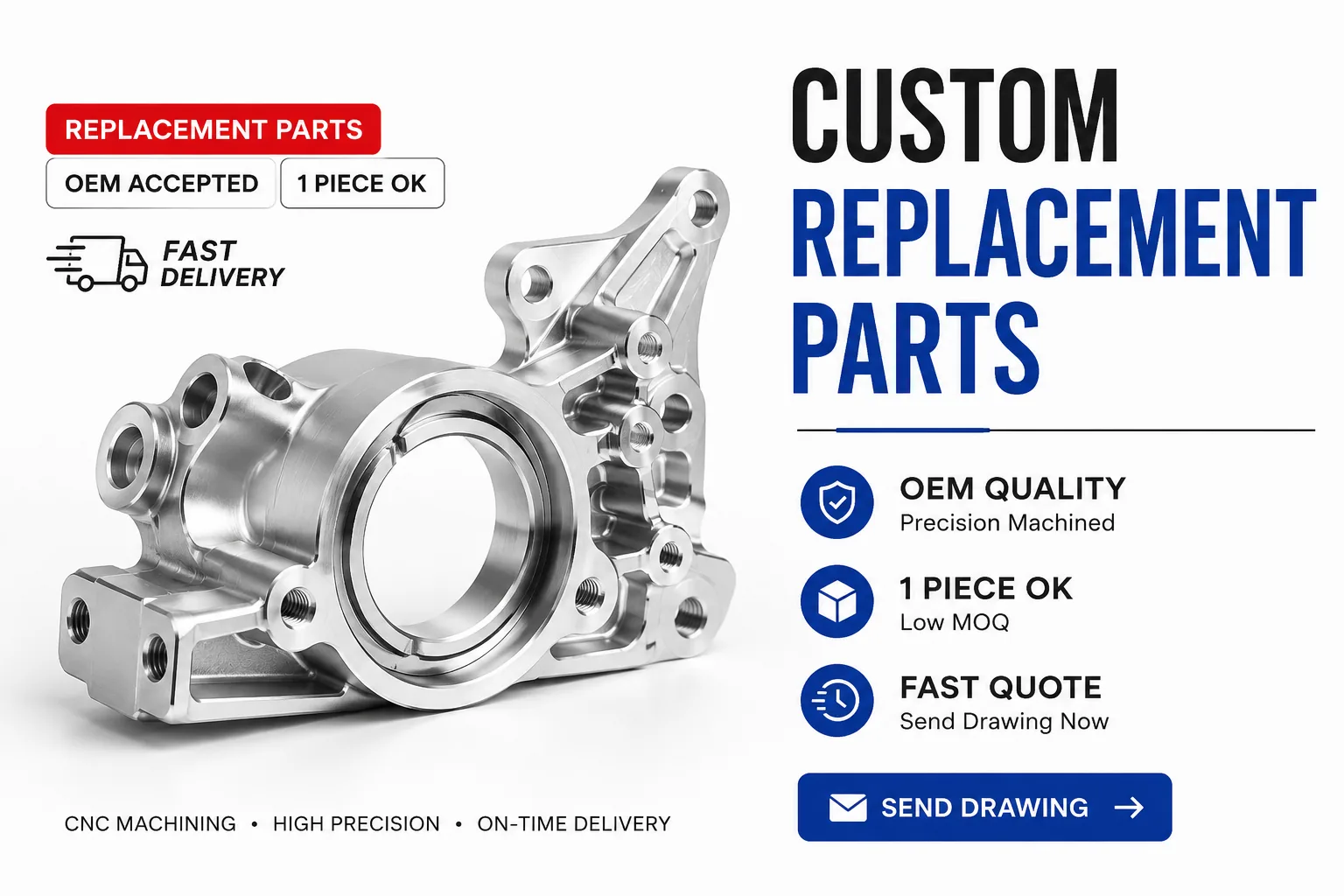
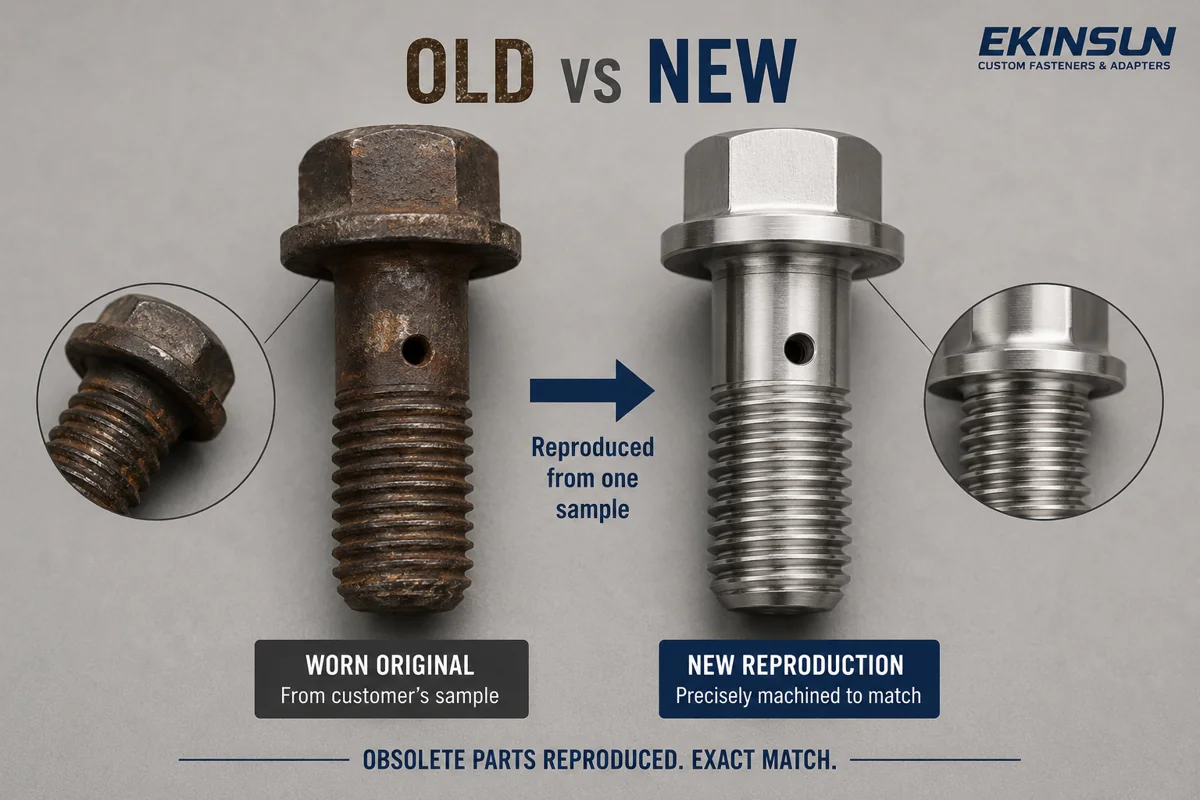
Real jobs where the machine builder had closed, the part was discontinued, and the only option was reproduction from what remained:
Who Comes to Us When the Maker Is Gone
The people who contact us have usually already chased OEM stock, surplus dealers and forums and come up empty. If you are at the stage of picking who remakes the part, our buyer’s guide to choosing a replacement parts manufacturer sets out what to ask. The machine is orphaned; the part is steel and bronze with measurable geometry. Here is who they are and what they send.
"Our machine builder was bought out and the new owner dropped our model — spares just stopped"
The case we see most. Send the worn part; we measure it, rebuild the geometry to design intent and machine it new — no OEM, no drawings, no part numbers needed. MOQ 1, with a spare quoted in the same run so you are never stranded twice.
"The company that built our line closed years ago and the support email bounces"
The machine does not care that its maker is gone. Send the failing part, or clear photos with one known dimension, and we quote a new one within 24 hours — reconstructing geometry even from a part that is worn or broken.
"Maker's gone — I want a spares shelf built before the critical parts fail"
The smartest moment to reproduce. We measure unworn parts during planned maintenance (the truest geometry, zero downtime), machine a small batch of each, and keep the CAD so every reorder is an email. Batch pricing beats emergency one-offs by far.
"I keep orphaned machines running for several clients and need a repeatable parts source"
We become your back-end shop for legacy equipment: reproduce drive parts, wear parts and proprietary fittings to form-fit-function, supply certs, and re-run from saved CAD. We flag standard items (bearings, seals) so you only pay to machine what is truly custom.
What Buyers Search For When the Manufacturer Is Gone
Frequently Asked Questions
Start with what you physically have: the failing part, or the machine it sits in. We don't need the maker, their drawings or their part numbers we measure your part, rebuild the CAD and manufacture it new. Photos with one known dimension are enough for a first quote within 24 hours.
Yes acquisition-orphaned machines are one of the most common cases we see. The new owner supports their own product line and quietly ends the legacy catalogue. The reproduction process is identical: send the part, approve the rebuilt drawing, receive new stock.
Machined and fabricated parts shafts, gears, bushings, housings, brackets, rollers, fittings yes. Standard commercial items (bearings, seals, motors, sensors) shouldn't be reproduced; we help identify their standard equivalents instead, which are usually still purchasable.
If the maker is already gone, yes that's the cheapest moment. The part can be measured unworn, there's no downtime pressure, and a small spares batch costs far less per piece than an emergency one-off later. Many customers build a shelf of critical spares this way.
Yes — and it's the cheapest path. While the machine still runs we measure the critical parts unworn (the truest geometry) and machine a small spares batch with no downtime pressure. We keep the CAD, so when a part finally fails the replacement is already on your shelf and reorders are a quick email.
Yes. We verify or upgrade the material and supply mill certs to the spec on request — important for pressure, lifting or regulated equipment where the original paperwork died with the OEM. Tell us the duty and we machine and certify accordingly.
Orphaned Machine Quote
Part or photos accepted. Reply in 24h.
// Qty & price
1 pc
Sample price
Confirm fit before a run
3–10
Unit price drops
Setup cost shared
10+
Best price
All tiers quoted upfront
- →No distributor — you pay the maker directly
- →CAD saved after first order — reorder anytime at lower unit price
support@ekinsun.ltd