Why Copper for CNC Machined Parts?
Copper offers two properties no other common metal matches simultaneously: exceptional electrical conductivity (~100% IACS for pure copper, vs ~26% for brass) and exceptional thermal conductivity (~400 W/m·K). These make copper the default choice for electrical contacts, bus bars, heat sinks, cooling blocks and any part where electrical or thermal performance is the primary requirement. The tradeoff is that pure copper is soft, prone to built-up edge in machining, and lacks the strength of steel or aluminium.
Copper Alloys We Machine
| Grade | Key property | Best for |
|---|---|---|
| C11000 (ETP Copper) | 99.9% Cu, ~100% IACS conductivity | Electrical bus bars, contacts, heat sinks, electrodes — highest conductivity |
| C10100 (OFE Copper) | Oxygen-free, ultra-high purity | Vacuum electronics, waveguides, high-frequency RF parts — no oxide inclusions |
| C17200 (Beryllium Copper) | High strength (~1,200 MPa UTS) | Springs, precision connectors, molds, non-sparking tools — premium alloy |
| C93200 (Bearing Bronze) | Cu-Sn-Pb, excellent wear | Bushings, plain bearings, wear plates |
ETP copper (C11000) is our default for electrical and thermal applications. OFE copper for vacuum/RF work. Beryllium copper on request for spring contact and tooling applications.
Mechanical Properties (C11000 ETP Copper)
| Property | Typical value |
|---|---|
| Electrical conductivity | ~100% IACS |
| Thermal conductivity | ~400 W/m·K |
| Ultimate tensile strength | ~220–250 MPa (annealed) |
| Yield strength | ~70 MPa (annealed) |
| Density | 8.94 g/cm³ |
| Melting point | 1,083 °C |
Copper is soft (Brinell hardness ~35–65 HB). It requires sharp, polished tooling and careful chip control to avoid galling and smearing. Machinability is ~20% relative to brass — it machines slower and tends to produce long stringy chips that require attention.
How We Machine Copper
- Tooling: Highly polished high-positive-rake carbide or HSS — copper galls on rough flutes. Sharp edges at all times.
- Coolant: Flood cooling with good lubricity reduces galling and helps chip removal.
- Chip control: Copper forms long stringy chips — we run chip-breaking geometry where available and clear regularly.
- Tolerances: ±0.025 mm achievable on critical features. Copper's softness means clamping force must be controlled to avoid distortion.
- Surface finish: Ra 0.8 µm achievable with sharp tooling; copper polishes to mirror with abrasive finishing.
Typical Copper CNC Parts
- Electrical bus bars and contacts — machined to shape from rod or plate
- Water-cooled heat sinks — channel-milled cooling blocks for high-power electronics
- Electrodes for EDM — graphite and copper electrodes machined to exact geometry
- RF and waveguide components — OFE copper for microwave applications
- Induction heating coils and susceptors — precision-machined coil shapes
- Ground straps and bonding hardware — machined connection blocks
- Replacement pump and valve parts — legacy copper and bronze fittings reproduced from worn samples
Copper vs Brass for thermal applications. Copper has ~3.5× the thermal conductivity of brass. For heat sinks and cooling blocks where heat transfer is critical, use copper. For fittings, connectors and structural parts, brass is easier to machine and often cheaper per part.
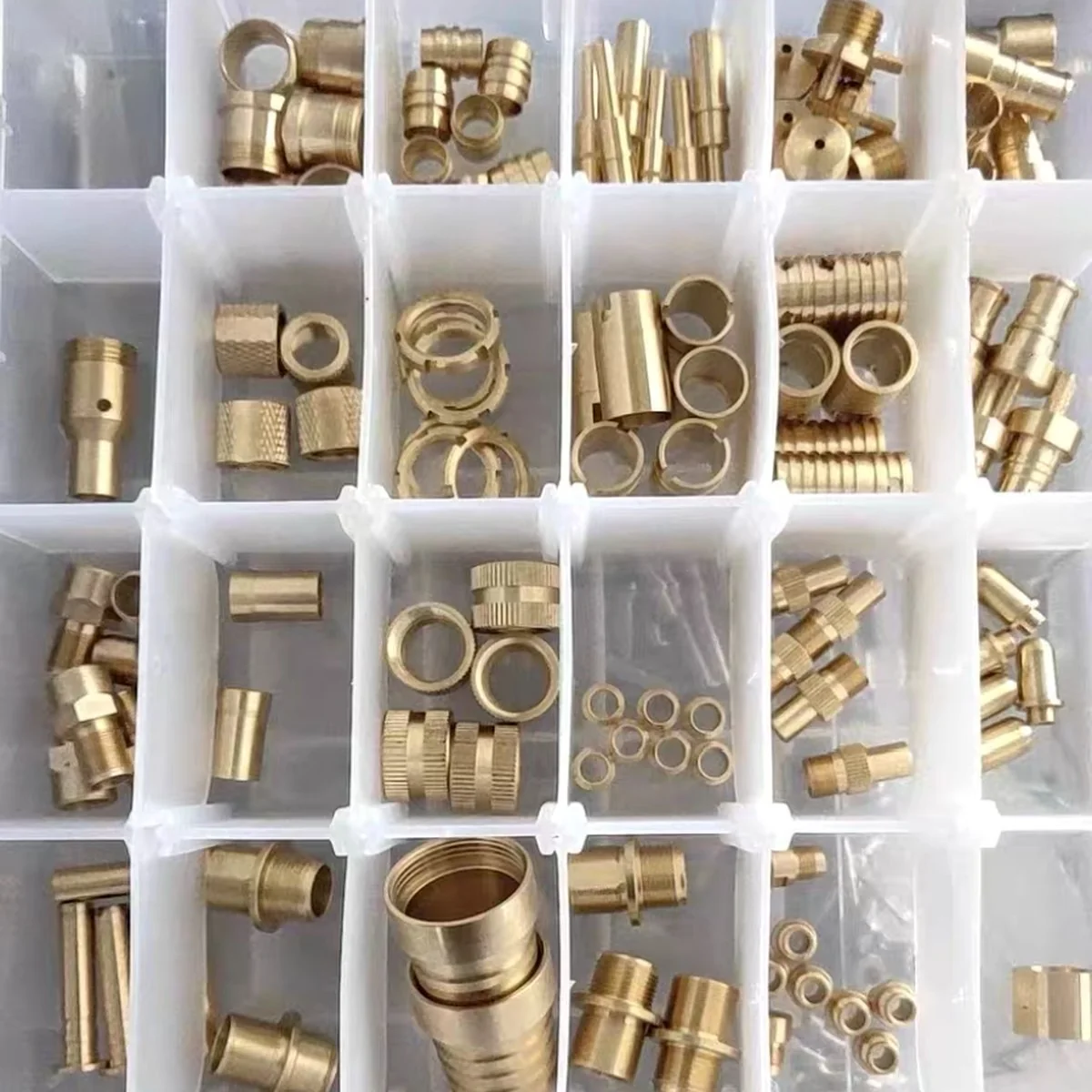
Custom Copper Parts — Who Orders and Why
Copper buyers come to us where electrical or thermal performance is the actual design requirement — not a nice-to-have. Common orders are heat sinks, bus bars, EDM electrodes, and legacy thermal parts that need reproduction.
"Channel-milled copper cooling blocks for a 10 kW inverter — 20 pcs"
C11000 ETP copper for maximum thermal conductivity (~400 W/m·K). We mill internal cooling channels, drill inlet/outlet ports, and machine mounting faces to flatness. 20 pcs in 3–4 weeks. Specify channel width and depth — we quote from your drawing or sketch.
"Custom copper bus bar segments — complex profile, 50 pcs, tin plated"
Bus bars machined from C11000 flat plate or rod. Complex profiles, mounting holes, cross-sections matching your current-density calculations. We coordinate tin or silver plating at post-processing. Sample approval before full run.
"OFE copper waveguide flanges — precise cavity dimensions, 5 pcs"
C10100 OFE (oxygen-free) copper for RF and microwave components — no oxide inclusions, maximum conductivity. We hold tight tolerances on cavity dimensions and flange faces. 5 pcs in 2–3 weeks. Confirm oxygen-free requirement in enquiry for vacuum applications.
"Legacy copper heat exchanger fitting — worn sample, no drawing, need a replacement"
Send us the worn fitting. We measure the geometry, rebuild CAD, and machine the replacement in C11000 or C93200 bronze as appropriate. Old pump and heat exchanger fittings in copper and bronze are among our most common sample-reproduction requests.
What Copper Parts Buyers Search For
Frequently Asked Questions
ETP (Electrolytic Tough Pitch, C11000) contains a small amount of oxygen (~300 ppm) — it is 99.9% pure and suitable for most electrical and thermal applications. OFE (Oxygen-Free Electronic, C10100) is 99.99% pure with essentially no oxygen — it is required for vacuum electronics, waveguides, and high-frequency RF components where oxygen inclusions would degrade performance. OFE is also required where the part will be joined by hydrogen brazing. For most heat sink and bus bar work, ETP is fine and more readily available.
Yes. ±0.025 mm is routinely achievable. Copper's softness requires careful clamping and tooling selection to avoid distortion, but it machines cleanly with sharp, polished tooling. We specify correct clamping forces for soft-material parts in quoting.
Beryllium copper can be safely machined provided beryllium dust is controlled — fine airborne beryllium particles are a health hazard. We machine C17200 with appropriate wet machining (to suppress dust) and dust extraction. We are experienced with this alloy for spring contacts, precision molds and non-sparking tooling. Specify C17200 in your enquiry and we will confirm our process controls.
Yes. Old pump fittings, heat exchanger parts, or legacy copper hardware can be reproduced from a worn sample using the same process as our broader replacement parts service: we measure the worn part, rebuild CAD, and machine or cast the reproduction. For large copper castings we can arrange sand casting; for machined copper parts we machine directly from rod or plate.
Copper's 100% IACS conductivity comes with lower machinability (~20% vs 100% for brass). Slower speeds, more tool changes and more careful chip management increase machine time and tooling cost. The copper material itself is also typically more expensive per kilogram than brass. The electrical and thermal performance justifies the premium where those properties are needed.
Get a Copper Machining Quote
Sketch, photo or CAD accepted. Reply in 24h.
// Qty & price
1 pc
Sample price
Confirm fit before a run
3–10
Unit price drops
Setup cost shared
10+
Best price
All tiers quoted upfront
- →No distributor — you pay the maker directly
- →CAD saved after first order — reorder anytime at lower unit price
support@ekinsun.ltd